

Finding truly natural beauty products can feel overwhelming when every label claims to be eco-friendly. For Australians passionate about wellness and the planet, understanding what defines a natural ingredient is key to making choices that are both luxurious and responsible. This guide highlights the basics of natural ingredient origins and ethical sourcing so you can confidently select cosmetics and fragrances that align with your values for health and sustainability.
Table of Contents
- Defining Natural Ingredients In Beauty Products
- Types Of Natural Ingredients And Sourcing Methods
- Health Benefits For Skin And Wellbeing
- Environmental Impacts Of Natural Vs Synthetic
- Safety, Regulation And Misconceptions
- Choosing Natural: Cost, Quality And Alternatives
Key Takeaways
| Point | Details |
|---|---|
| Natural ingredients offer complex benefits | They contain antioxidants and bioactive compounds that enhance skin health beyond traditional synthetic alternatives. |
| Sourcing matters | Understanding the origin and extraction methods of natural ingredients is crucial for ethical and sustainable use. |
| Regulation ensures safety | Natural does not automatically mean safe; rigorous assessments are necessary to verify product safety. |
| Consumer choices shape the market | Increased demand for transparency and sustainability in beauty products encourages innovation and ethical practices in sourcing. |
Defining Natural Ingredients in Beauty Products
Natural ingredients in beauty and skincare products represent a critical evolution in cosmetic formulation, moving beyond synthetic compounds towards botanically-derived, minimally processed substances. Emerging regulatory frameworks in Europe are establishing rigorous standards that define natural ingredients as substances originating from plants, animals, and minerals with minimal chemical manipulation.
These ingredients are characterised by several fundamental criteria:
- Plant-based origins from herbs, flowers, roots, and botanical extracts
- Minimal processing that preserves the ingredient’s inherent molecular structure
- Traceable sourcing from sustainable and ethical production methods
- Limited chemical intervention during extraction and preparation
The scientific community recognises natural ingredients as complex compounds that offer multifaceted benefits beyond traditional synthetic alternatives. Cosmetic research highlights demonstrate that these ingredients often contain intrinsic antioxidants, vitamins, and bioactive compounds that interact synergistically with human skin biology.
Understanding natural ingredients requires recognising their nuanced characteristics. Unlike synthetic counterparts, these substances are dynamic, containing trace minerals, enzymes, and compounds that cannot be perfectly replicated in laboratory settings. Their effectiveness stems from holistic, whole-ingredient properties rather than isolated chemical structures.
Pro tip: Always verify ingredient lists and look for transparent sourcing information when selecting natural skincare products.
Types of Natural Ingredients and Sourcing Methods
The world of natural ingredients encompasses an incredibly diverse range of botanical, marine, and microbial sources, each offering unique therapeutic properties for skincare and beauty applications. Natural ingredient supply chains represent a complex ecosystem of sustainable sourcing practices that go far beyond traditional manufacturing approaches.
Natural ingredients can be broadly categorised into several key sources:
- Botanical extracts from herbs, flowers, roots, and tree components
- Marine organisms including algae, seaweed, and marine plant derivatives
- Microbial sources such as fermented ingredients and probiotic compounds
- Animal-derived substances like honey, beeswax, and milk proteins
- Mineral-based ingredients from clay, salt, and trace mineral complexes
Sustainable harvesting techniques play a critical role in preserving ecological balance while meeting growing consumer demand for natural beauty products. These methods involve carefully selecting extraction processes that maintain the integrity of raw materials, minimise environmental impact, and support local ecosystems.
The sourcing of natural ingredients requires intricate knowledge of seasonal variations, regional biodiversity, and complex extraction methodologies. Unlike synthetic ingredient production, natural ingredient sourcing demands a nuanced approach that balances ecological preservation, quality control, and sustainable agricultural practices.
To help differentiate sourcing origins, here’s a reference table for common natural ingredient sources and traits:
| Source Type | Typical Examples | Core Benefits |
|---|---|---|
| Botanical | Aloe vera, chamomile, lavender | Rich in antioxidants, soothing effects |
| Marine | Seaweed, algae, marine minerals | Hydration, mineral replenishment |
| Microbial | Fermented yeast, probiotics | Skin microbiome balance |
| Animal-derived | Honey, beeswax, lanolin | Moisturising, barrier protection |
| Mineral | Clay, zinc oxide, salt | Absorption, sun protection, exfoliation |
Pro tip: Research the specific origin and extraction methods of natural ingredients to ensure you’re supporting ethical and environmentally responsible beauty practices.
Health Benefits for Skin and Wellbeing
Natural ingredients represent a holistic approach to skincare that goes beyond surface-level treatments, offering profound health benefits for both skin physiology and overall wellbeing. Plant-based phytochemicals provide a powerful arsenal of therapeutic compounds that actively support skin health through multiple biochemical pathways.
The key health benefits of natural ingredients include:
- Antioxidant protection against environmental stressors and free radical damage
- Anti-inflammatory properties that reduce skin irritation and redness
- Collagen and elastin support to maintain skin structural integrity
- Enhanced skin barrier function improving hydration and resilience
- Cellular regeneration stimulating natural healing processes
Dermatologist-recommended active ingredients work synergistically to address multiple skin concerns, delivering targeted nutrition through bioactive compounds. These natural elements contain concentrated vitamins, peptides, and minerals that nourish skin at a cellular level, promoting long-term health and radiance.

Beyond physical improvements, natural ingredients contribute to psychological wellbeing by creating a sensory experience that connects individuals with nature’s healing potential. The complex molecular structures found in botanical extracts interact with skin receptors, triggering positive physiological responses that extend beyond cosmetic appearance.
Pro tip: Choose skincare products with transparent ingredient lists that highlight specific botanical extracts and their targeted skin benefits.
Environmental Impacts of Natural vs Synthetic
The beauty industry stands at a critical environmental crossroads, where the choice between synthetic and natural ingredients carries profound ecological consequences. Synthetic cosmetics production represents a significant environmental challenge, generating substantial pollution and ecosystem disruption through complex manufacturing processes and non-biodegradable waste streams.
Key environmental considerations include:
- Petrochemical dependence in synthetic ingredient manufacturing
- Packaging waste generated by conventional cosmetic production
- Ecosystem disruption from unsustainable resource extraction
- Carbon footprint associated with synthetic ingredient processing
- Water pollution from chemical runoff and manufacturing waste
Sustainable ingredient alternatives offer a promising pathway toward reducing environmental impact. Responsibly sourced natural ingredients can potentially replace petrochemical-based substances, creating formulations that are not only effective but also more environmentally conscious.
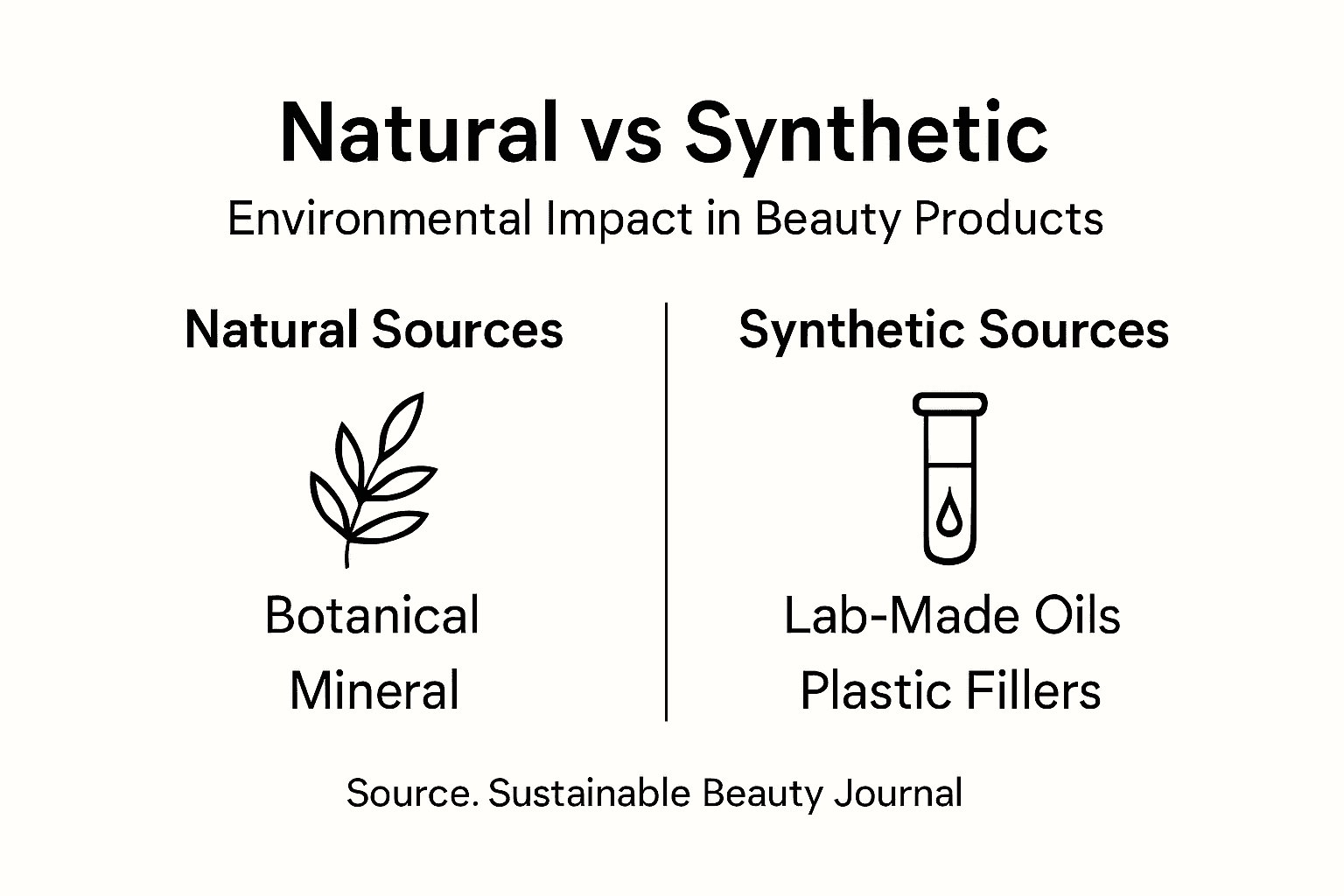
The transition requires a nuanced understanding that natural doesn’t automatically mean sustainable. Ethical sourcing, minimal processing, and regenerative agricultural practices are crucial in ensuring that natural ingredients truly represent an ecological improvement over synthetic alternatives.
Here’s a comparison of natural versus synthetic beauty product ingredients from an environmental and product perspective:
| Factor | Natural Ingredients | Synthetic Ingredients |
|---|---|---|
| Environmental Impact | Potentially lower with sustainable sourcing | Typically higher due to chemical processes |
| Biodegradability | Generally high, eco-friendly breakdown | Often low, leads to persistent waste |
| Resource Use | May support local agriculture | Heavily reliant on petrochemicals |
| Consumer Perception | Associated with health and ethics | Viewed as less eco-conscious |
| Supply Chain Complexity | Highly variable, requires traceability | More controlled, consistent sourcing |
Pro tip: Look for beauty brands that provide transparent documentation about their ingredient sourcing and environmental impact assessment.
Safety, Regulation and Misconceptions
The beauty industry confronts a complex landscape of safety regulations and consumer perceptions, challenging the simplistic notion that ‘natural’ automatically equates to ‘safe’. Cosmetic ingredient safety assessment involves rigorous scientific evaluation that goes far beyond marketing claims, demanding comprehensive toxicological analysis and evidence-based scrutiny.
Key regulatory considerations include:
- Hazard identification for potential contaminants and allergens
- Concentration limit verification for active ingredients
- Toxicological risk profiling of individual components
- Allergen screening for sensitive skin types
- Transparent ingredient documentation requirements
European regulatory frameworks establish stringent guidelines that manufacturers must navigate, emphasising scientific substantiation over marketing rhetoric. These standards demand thorough documentation, proving that natural ingredients undergo equally—if not more—comprehensive safety assessments compared to synthetic alternatives.
Common misconceptions about natural ingredients persist, with many consumers assuming ‘natural’ means completely harmless. In reality, botanical and organic compounds can be just as potent and potentially irritating as synthetic molecules, underscoring the importance of professional formulation and expert understanding.
Pro tip: Always consult ingredient lists and look for brands that provide detailed scientific documentation about their product safety assessments.
Choosing Natural: Cost, Quality and Alternatives
The landscape of natural beauty products is evolving rapidly, challenging traditional perceptions about cost, quality, and ingredient effectiveness. Cosmetic industry research reveals a sophisticated approach to developing natural alternatives that balance consumer expectations with scientific performance standards.
Key considerations when selecting natural ingredients include:
- Performance comparability with synthetic counterparts
- Cost implications of sustainable sourcing
- Biotechnological innovations reducing production expenses
- Supply chain transparency and ethical procurement
- Long-term environmental sustainability
Emerging biotechnology solutions are dramatically transforming the natural ingredients marketplace, creating more accessible and affordable options. These technological advances enable manufacturers to develop high-quality natural formulations that compete effectively with traditional synthetic products in terms of stability, efficacy, and consumer appeal.
The true value of natural ingredients extends beyond immediate product performance, encompassing broader considerations of environmental impact, personal health, and sustainable innovation. Consumers are increasingly willing to invest in products that demonstrate a holistic commitment to quality, transparency, and ecological responsibility.
Pro tip: Research brands that provide detailed documentation about their natural ingredient sourcing and invest in products with verifiable sustainable practices.
Discover Sustainable Beauty with Kindly By Joe
The challenge of embracing natural ingredients for truly sustainable beauty calls for skincare and grooming products that deliver on the promise of ethical sourcing, potent botanicals and environmental care. At Kindly By Joe, we understand your desire for effective formulations that nourish skin deeply while respecting the planet and your wellbeing. Our carefully crafted Botanically Infused Facial Care and Botanically Scented Grooming products – Kindly By Joe harness sustainable ingredients to provide natural antioxidant protection and anti-inflammatory benefits discussed in the article.

Explore the transformative power of small batch cosmetics made with premium natural ingredients and sustainable packaging at Kindly By Joe. Take action now by choosing products with transparent sourcing and eco-conscious formulations that support your skin health and help protect our environment today.
Frequently Asked Questions
What are the benefits of using natural ingredients in beauty products?
Natural ingredients offer numerous benefits, including antioxidant protection, anti-inflammatory properties, and enhanced skin barrier function. They support overall skin health by providing essential vitamins, minerals, and bioactive compounds that promote cellular regeneration and improve resilience.
How do natural ingredients compare to synthetic alternatives in terms of safety?
While natural ingredients are often perceived as safer, they can still contain potent compounds that may irritate sensitive skin. Comprehensive safety assessments are necessary for both natural and synthetic ingredients to ensure they are safe for consumer use, highlighting the need for professional formulation.
What should I consider when choosing products with natural ingredients?
When selecting natural beauty products, consider the performance compared to synthetic alternatives, the cost implications of sustainable sourcing, and the transparency of supply chains. Investigate the technological innovations behind these products to ensure they meet efficacy and stability standards.
How does the sourcing of natural ingredients impact the environment?
Sustainable sourcing of natural ingredients can have a lower environmental impact compared to synthetic production, which often relies on petrochemicals and has considerable waste. However, it is essential to ensure that harvesting methods are ethical and do not disrupt local ecosystems. Sustainable practices help support biodiversity and reduce overall ecological footprints.
Recommended
- Best skincare for sensitive skin: Gentle routines that actually work – Kindly By Joe
- Kindly by Joe – Botanical Skincare, Body Care & Fragrance
- Why More Isn’t Better in Skincare | The Truth About Active Ingredient Percentages – Kindly By Joe
- Kindly Blog | Rituals, Ingredients & Considered Care – Kindly By Joe
0 comments